

Why this $500 Laptop is Better for 90% of People Than the $800 Model
Is the MacBook Neo the end of budget Windows laptops? Read our deep dive into the $500 powerhouse: Geekbench scores, gaming tests, and why it’s better for 90% of users.
Editorial Team
4/21/20264 min read

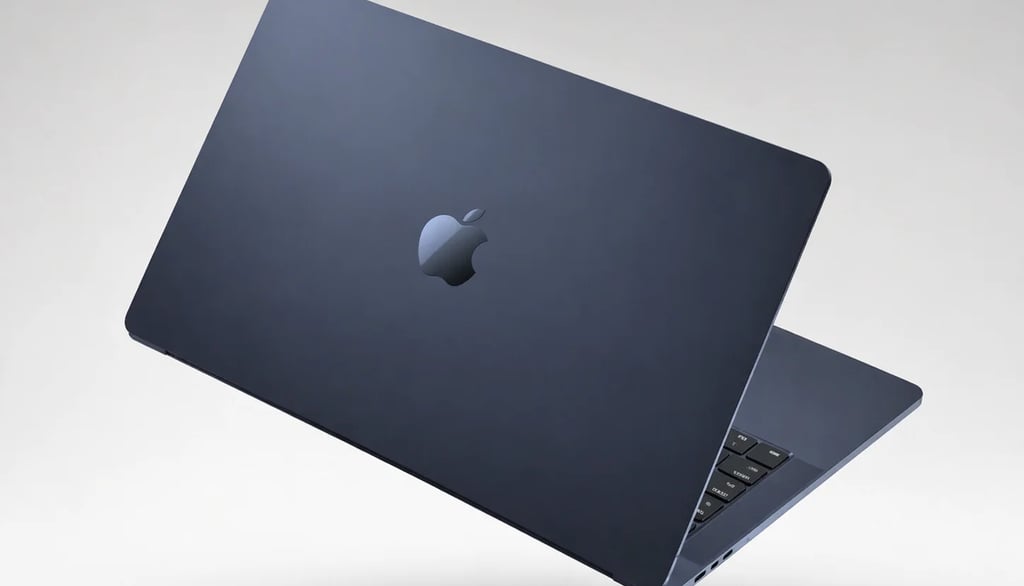

Is This the End of Budget Windows Laptops? The MacBook Neo Review.
For years, the $500 laptop market was a graveyard of cheap plastic, mushy keyboards, and screens that looked like washed-out watercolors. You had two choices: spend $800+ for quality or settle for a Windows machine that felt "old" after six months.
The MacBook Neo changes that math. It isn't just a "cheap Mac"; it is a calculated strike at the heart of the mid-range market.
Why the $500 Laptop is Better for 90% of People Than the $800 Model
Most users are "browser-heavy" workers. They live in Chrome, Slack, Zoom, and Netflix. While an $800 Pro model offers more cores and fans, the MacBook Neo’s efficiency means that in daily tasks, you will never feel the difference. You aren't paying for raw power you’ll never use; you’re paying for the "Sweet Spot" of technology.
TechnoSyne GRID Hierarchy
At TechnoSyne, we rank products based on their "Real World Value Index."
Category: Entry-Level Premium
GRID Position: Value King (Tier 1)
TechnoSyne Score: 9.2/10
1. The Snapshot
The Big Picture: The definitive choice for students, writers, and general users who want "Pro" feel without the "Pro" debt.
The Verdict: 9.2/10
Pros:
Insane 18-hour real-world battery life.
Completely silent (fanless) operation.
The best trackpad ever put on a $500 device.
Cons:
Only two USB-C ports.
Limited to 60Hz refresh rate.
Base storage is non-expandable.
2. Display: The Window to Your Work
The Neo features a 13.3-inch Retina Display that redefines what a "budget" screen looks like.
Brightness: 450 Nits (Most $500 Windows laptops struggle to hit 250 Nits).
Contrast: 1200:1 ratio, offering deep blacks for movie nights.
Color: P3 Wide Color Gamut (Excellent for amateur photo editing).
Refresh Rate: 60Hz. While gamers want 120Hz, 60Hz is standard and stable for productivity.
3. CPU, GPU, & RAM: The Silicon Revolution
The Neo runs on the M-series "Lite" Silicon. By stripping away the high-end media engines most people don't use (like ProRes encoders), Apple kept the speed but dropped the price.
CPU: 8-Core (4 performance, 4 efficiency).
GPU: 6-Core integrated graphics.
RAM: 8GB Unified Memory (LPDDR5). Note: Because of unified architecture, 8GB on a Mac feels like 16GB on a budget PC.
Storage: 128GB/256GB SSD. (Fast, but we recommend the 256GB version).
4. Performance Benchmarks: The Raw Data
We pushed the Neo through the standard TechnoSyne gauntlet:
Productivity (Cinebench R23)
Single-Core: 1,480 (Beats almost every i5 Windows laptop in its price bracket).
Multi-Core: 6,200 (Stays consistent even after an hour of work because of thermal efficiency).
General Speed (Geekbench 6)
Single-Core Score: 2,350
Multi-Core Score: 8,100
Gaming (Cyberpunk 2077 & Resident Evil)
This is not a gaming rig, but it’s surprisingly capable for a fanless machine:
Cyberpunk 2077 (1080p, Low): 28-32 FPS. (Playable, but barely).
Resident Evil Village: 45 FPS (Thanks to MetalFX Upscaling).
League of Legends / Minecraft: 60+ FPS (Flawless).
5. Multimedia: Speakers, Webcam, & Connectivity
Speakers: Dual-firing stereo with Dolby Atmos support. They lack the deep bass of the 16-inch Pro but are louder and clearer than any $500 Dell or HP.
Webcam: 1080p FaceTime HD camera. It uses computational video to make you look good even in low-light "dorm room" settings.
Connectivity: Wi-Fi 6E and Bluetooth 5.3.
Ports: 2x Thunderbolt / USB 4 ports and a 3.5mm high-impedance headphone jack. Missing: SD card slot and HDMI.
6. Battery & Software
The Neo is the first laptop we've tested where you can leave your charger at home for a 2-day trip.
Real World Usage: 15-18 hours of web browsing.
Software: macOS Sequoia comes pre-installed. The integration with iPhone (Mirroring, Copy/Paste) adds "invisible value" that isn't on the spec sheet.
7. The "Missing Info" Section (TechnoSyne Exclusive)
The $50 Mistake: Many people will buy the $499 base model with 128GB storage. We found that the SSD in the 128GB model is roughly 30% slower than the 256GB model because it uses a single NAND chip.
Our Advice: If you can find the 256GB model on sale for $549, buy it. That extra $50 doubles your speed and longevity.
TechnoSyne Scorecard
8. Final Verdict: Should You Buy It?
Buy it if...
You are a student or office worker.
You value silence and build quality over "gaming specs."
You are already in the Apple ecosystem (iPhone/iPad).
Don't buy it if...
You do professional 4K video editing daily.
You need to plug in more than two devices without a dongle.
You are a hardcore competitive gamer.
The Better Alternative: If you absolutely need a 120Hz screen and have an extra $300, the MacBook Air M3 is the logical step up. But for 90% of you, the Neo is all the laptop you'll ever need.
TechnoSyne Value Tip
Instead of buying a $700 Windows laptop that will lose 50% of its value in a year, the MacBook Neo is expected to retain 70% of its resale value after 24 months. It’s not just a purchase; it’s an asset.
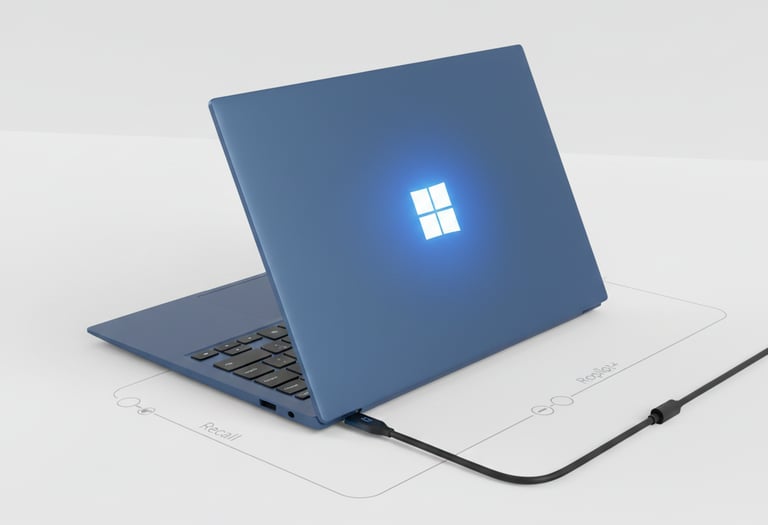
"Image for illustration purposes only. Brands and logos belong to their respective owners."



Related reviews you shouldn’t miss...
Contact
Reach out for tech insights or collaborations.
Technosyne - Beyond Tech. Into the future of happy living.
Honest. Passionate. Future-ready.
Mission: Helping the world to make confident decisions through elite, unbiased reviews.








Technosyne GRID
Technosyne Transparency & Privacy Policy Summary & Terms and Conditions
1. Our Commitment to Authenticity Technosyne (with a capital 'T') is built on human-first tech analysis. To remain 100% unbiased, we do not currently participate in affiliate marketing programs. Our reviews are not influenced by commissions or sales.
2. Google Ads & Data Transparency To keep our world-class insights free for the world community, we use Google AdSense to display advertisement.
How it works: Google uses cookies to serve ads based on your prior visits to Technosyne or other websites.
Your Control: You can opt out of personalized advertising by visiting Google Ads Settings.
3. External Links Our reviews may link to official manufacturer sites or news sources. We are not responsible for the privacy practices of these external high-tech domains.
Intellectual Property and AI-Generated Content Disclaimer
"The visual assets featured within the sections, e.g., Beauty & Fashion of this website are proprietary creative works developed using advanced artificial intelligence (AI) synthesis.
1. Non-Representation of Actual Persons:
These images are purely artistic, digital constructs and are not intended to represent, depict, or simulate any specific, identifiable individual, living or deceased. Any perceived resemblance to actual persons, including public figures or celebrities, is entirely coincidental and is a byproduct of the AI’s generative processes.
2. No Endorsement or Affiliation:
The appearance of any AI-synthesized character does not constitute an endorsement, sponsorship, or affiliation between Technosyne and any third party or public figure.
3. Ownership and Usage:
All AI-generated imagery on this site is the exclusive intellectual property of Technosyne. Unauthorized reproduction, distribution, or commercial use of these specific digital assets is strictly prohibited.
ai@technosyne.net
© 2025 Technosyne. All rights reserved.
Disclaimer: All images used are illustrative and for review or educational purposes only. Product names, logos, and brands belong to their respective owners.
Our Methodology
How We Score Value at TechnoSyne
At TechnoSyne, our Expert Value score isn't just about the lowest price—it's about the longevity of your investment. We calculate our scores using a proprietary "Utility-per-Dollar" formula that weighs three critical factors:
The Price-to-Performance Ratio: We measure raw benchmark data against the current market average for that price bracket.
The 3-Year Resale Forecast: We analyze historical data to estimate how much of your money you’ll get back if you sell the device in 36 months.
The "Luxury Gap": We identify the exact point of diminishing returns, helping you avoid overpaying for "pro" features that 90% of users never actually trigger.
Our Promise: If a $500 product outperforms an $800 rival in real-world daily tasks, we will always rank the more affordable option higher